What Is CRM Marketing? 8 Tips (+ Things to Avoid)
CRM and marketing go hand in hand. Here are 8 best practices for a successful strategy, plus a few things to avoid.
CRM and marketing go hand in hand. Here are 8 best practices for a successful strategy, plus a few things to avoid.
Table of contents
What is CRM marketing?
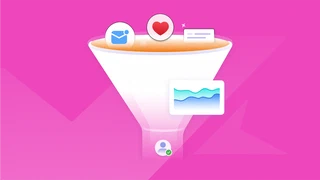
CRM stands for Customer Relationship Management. CRM marketing is about building and maintaining strong customer relationships using data and automation.
A CRM system gives you insight into who your customers are, how they behave, what their interests are, and what stage of the customer journey they are in.
Based on this, you can deploy highly targeted marketing campaigns such as personalized emails or relevant offers. A simple example of this is reminding people of a product they bought three months ago, such as contact lenses, and that it’s now time to buy new lenses.
Find out how to do that, and what else you can do with CRM software, below.
Benefits of CRM marketing
A good CRM marketing strategy has a lot to offer:
- Better insight into your customers.
- Higher customer satisfaction.
- More conversions.
- Stronger customer loyalty.
- More time, because you work more efficiently.
- Better collaboration between teams.
In a CRM tool, such as FlowQi CRM, you store all data about your customers, stakeholders, or donors—depending on the type of organization you run. Name, location, date of birth, products or services they have purchased, when you have been in contact with them, through which channel they respond, which emails they open, etc.
This means you have all your data in one place, which you can then use for automation actions (sending automatic emails on birthdays), optimizing your email campaigns and products, following up on warm leads, warming up cold leads, etc.
See? You can do a lot with a smart CRM tool! Want to see how it works in practice? Sign up for our BETA Program now and try our CRM and all other software for free.
8 Best practices for successful CRM marketing
Want to use CRM marketing successfully? Here are 8 best practices.
1. Work with one central database
The days of Excel are over. At least, that’s how we feel. And so is switching between separate tools. That’s why we developed FlowQi: to minimize switching and make collaboration between teams easier.
2. Segment your target audience
Not everyone wants to hear the same thing. Create lists based on behavior, interests, customer status, or region. This allows you to communicate in a more targeted way.
3. Use automation (but with personalization)
Automate repetitive tasks such as welcome emails or reminders, but keep it personal. Add someone’s first name and relevant content.
4. Be consistent in your communication
Don’t let customers get lost in conflicting messages. Coordinate your emails, advertisements, and sales.
5. Link your CRM system to other tools
FlowQi CRM is already linked to project management and task management tools. If you want to link even more tools to your CRM, link it to your email marketing or get FlowQi Email Marketing as well.
6. Analyze and optimize
Check your statistics regularly. Which emails are being opened? Where are people dropping out? Adjust your approach where necessary.
7. Actively ask for feedback
Use your CRM to collect feedback via short surveys or follow-up emails. Your customers often know exactly what could be improved.
8. Train your team in the use of your CRM tool
A CRM system will not be successful if you are the only one using it. Train your team and ensure support.
What to avoid?
Just as important as following best practices for CRM marketing is knowing what not to do.
- Spamming. With automation, you can send up to three emails a day! But it’s better not to.
- Not setting goals. Without a strategy, your CRM becomes a digital card index.
- Not keeping data up to date. Old customer data leads to errors and frustration.
- Forgetting to be personal. Nobody likes to be called “Dear customer.”
- Using CRM solely as a sales tool. Use CRM for your customer service and relationship management as well.
Practical example of CRM marketing
Let’s take a look at how to set up a personalized reminder email in practice. We want to send our customers who purchased contact lenses three months ago a personalized email with:
- A reminder that they need new lenses
- An offer for a repeat purchase with a discount
- Suggestions for matching products (such as lens solution)
This is how you set that up:
In your CRM tool, set up an automatic email flow:
- Trigger: purchase date of quarterly lenses = 3 months ago
- Action: send email with personalized content
Personalize the email. Do you now have to send a separate, personalized email to each customer? No! Simply write a personalized email by using a name tag:
Hi [first name tag], according to our calendar, your lenses are due for replacement.
Three months ago, you ordered our quarterly lenses. Chances are you have dry eyes right now!
To make your eyes happy again, we are offering you a 10% discount on your next order.
Use code: FRESHEYES10
P.S. Did you know that our quarterly lenses last longer with our new lens solution?
Test FlowQi’s CRM Marketing Tools
A good CRM system such as FlowQi (or an alternative) forms the foundation of your CRM marketing strategy because it brings everything together in one central place.
Customer data, contact moments, tasks, emails, and sales information are clearly bundled, so you always have insight into your customer relationships.
What’s more, FlowQi is designed to be user-friendly, so even if you’re not an IT specialist, you can work with it effortlessly. Automating processes is easy, without complicated scripts or technical knowledge.
On top of that, FlowQi offers good support and integration options with tools you probably already use, such as your email platform or webshop.
And, perhaps important for smaller businesses and nonprofits: it’s affordable and scalable, even if you don’t have a large budget.
Want to see how our software works in practice? Sign up for our BETA Program and try all our tools for free.